The Nehu
The Most Important Fish You’ve Never Heard Of...
What It Is
Encrasicholina purpurea — a small, silver anchovy endemic exclusively to the Hawaiian Islands. The foundational forage fish of the Hawaiian marine food web.
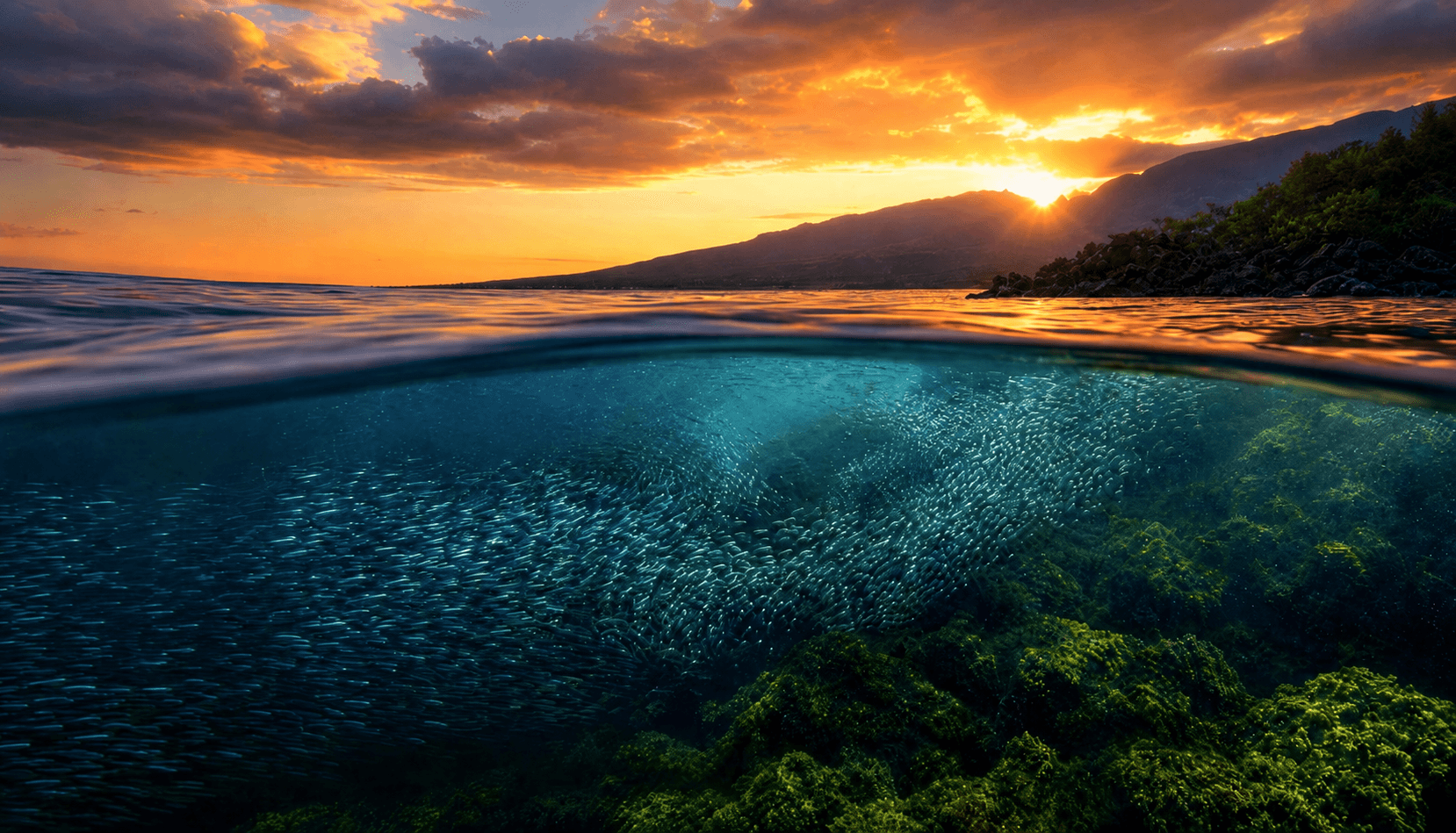
Why the Nehu Matters
Traditional Aku Fishery
Primary live bait for traditional aku (skipjack tuna) pole-and-line fishery.
Apex Food Web
Critical food for ahi, ʻopelu, akule, dolphins, and seabirds.
Estuarine Habitats
Lives in estuarine and inner-coastal areas — extremely vulnerable to nearshore pollution, water quality, and habitat loss.
Food Sovereignty
No nehu = no aku fishery = no food sovereignty.
“He aliʻi ka ʼaina, he kauwā ke kanaka.”The land is chief; the people are its servants.
The Cesspool Crisis
53 Million Gallons of Sewage Enter Hawaiʻi’s Ocean Every Single Day
Hawaiʻi has the most cesspools per capita of any state. Untreated human waste discharges into groundwater and flows directly into the ocean, destroying nearshore habitats.
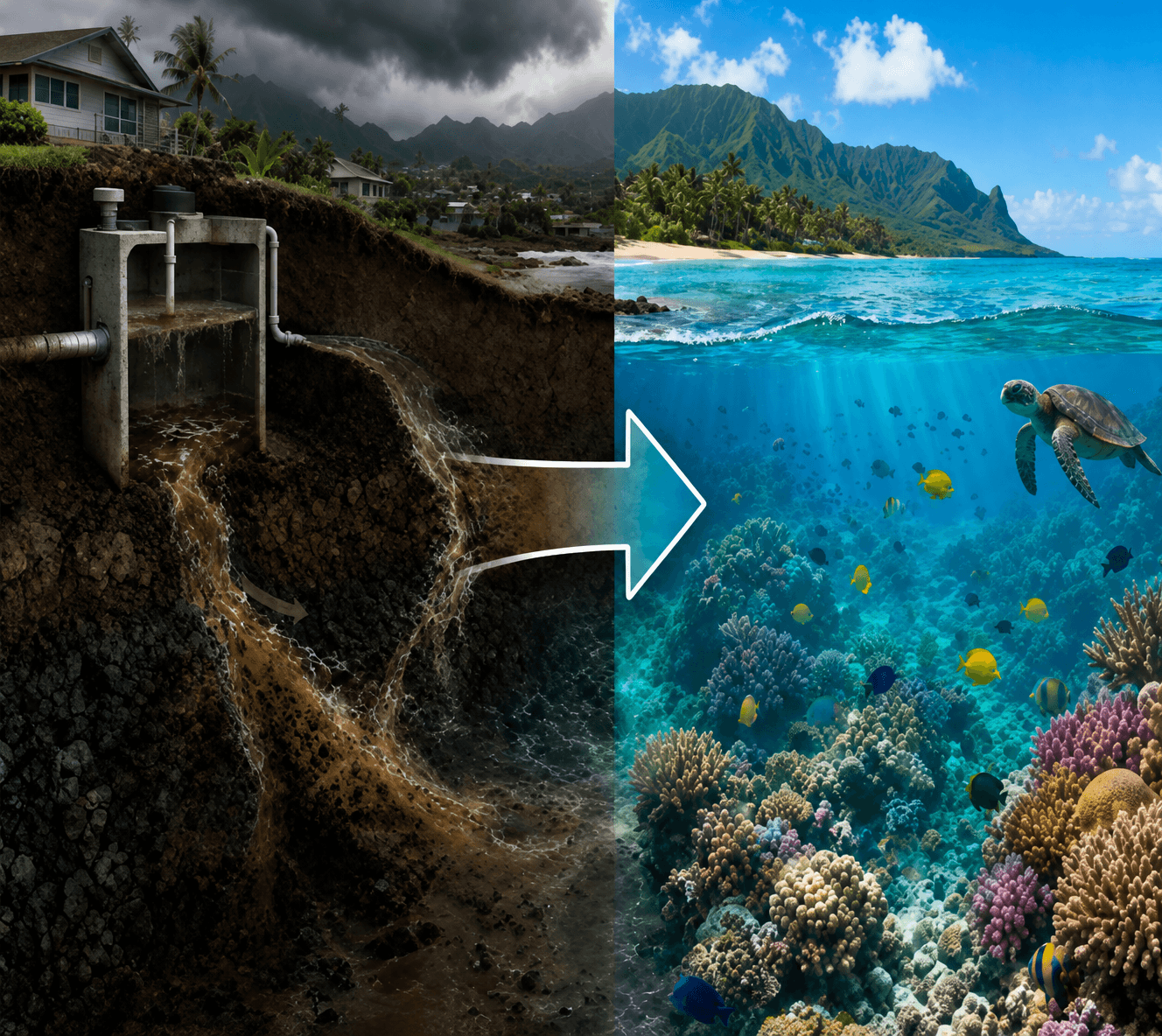
How Waste Destroys Nearshore Life
Cesspool Density
88,000 cesspools statewide; 12,000+ on Maui alone.
Pathogen Contamination
Effluent carries nitrogen, phosphorus, bacteria, viruses.
Coral Reef Suffocation
Nutrient loading causes algal blooms killing coral reefs.
Water Supply Threat
50% of private drinking water wells near cesspools test positive for fecal bacteria.
Public Health Impact
Hawaiʻi has the highest MRSA* rates in the nation.
*Methicillin-resistant Staphylococcus aureus
Act 125 (2017) mandates all 88,000 cesspools converted by 2050. Current rate: ~300/year.
Required rate: 3,000+/year — a 10x acceleration needed.
A Fragmented Response
Conservation in Hawaiʻi Is Fragmented, Underfunded, and Culturally Disconnected

Why Traditional Conservation Falls Short
Fragmentation
Organizations work in silos, leaving critical gaps.
Cultural Disconnect
Programs lack Native Hawaiian ecological knowledge.
Funding Gap
Conservation funding declined 23% since 2019.
No single organization has ever attempted to address the full system. Until now.